Round-Trip Average Speed: Why 10 and 20 km/h Do Not Make 15
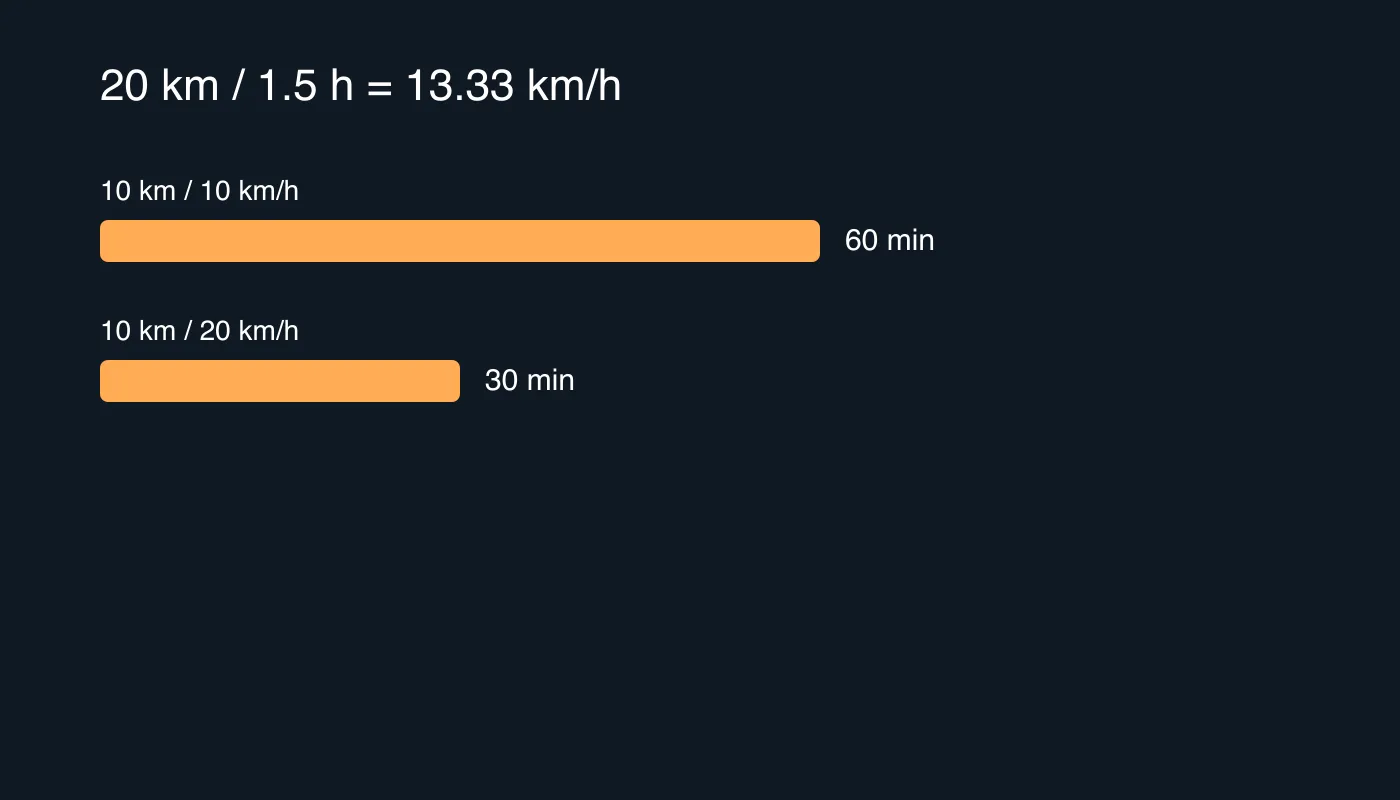
Ride 10 km out at 10 km/h and return the same distance at 20 km/h. Your average speed is 13.33 km/h, not 15. The slower leg occupies more of the journey’s time.
Worked example
The outward leg takes 60 minutes and the return 30 minutes. Divide 20 km by 1.5 hours. For equal distances at positive speeds a and b, the shortcut is 2ab/(a+b). It is the harmonic mean; it does not apply to unequal distances.
When the shortcut works
A simple arithmetic mean works when the time at each speed is equal: 30 minutes at 10 km/h plus 30 minutes at 20 km/h covers 5 + 10 = 15 km in one hour. Equal distance and equal time are different conditions.
Use it on a real trip
For unequal legs, add every distance and divide by the sum of distance/speed for each leg. Include breaks if you want a whole-trip average. These examples assume constant speed within each leg and no stops; they are calculations, not recorded rides.
Tools and reading
Related Articles
2026-10-31
How Much Time Does a Higher Speed Really Save?
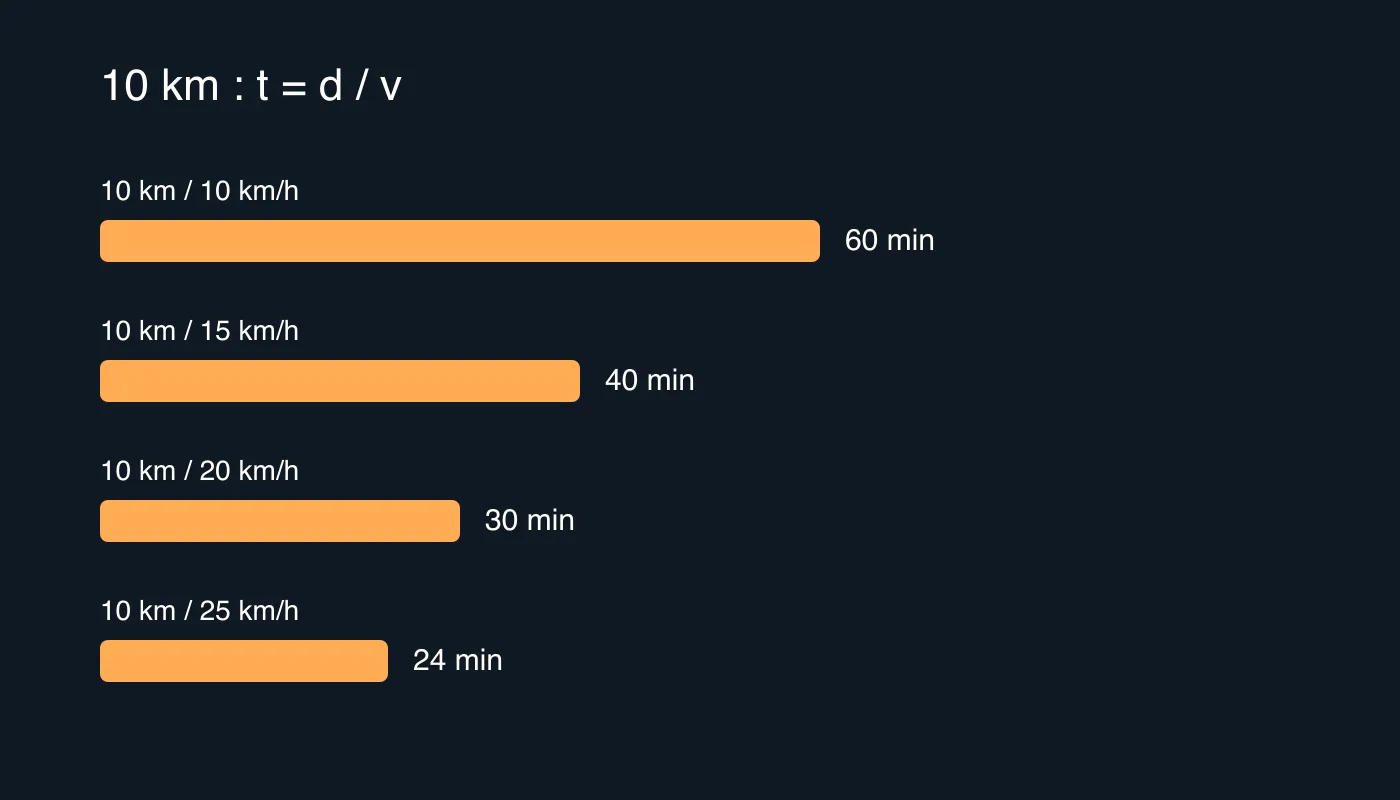
Over 10 km, increasing a constant speed from 10 to 15 km/h saves 20 minutes. Increasing it from 20 to 25 km/h saves only 6 minutes. The same 5 km/h increase does not buy the same amount of time.

2026-10-01
Average Speed vs Moving Speed: Why Stops Matter
Calculate average and moving speed with a worked example and understand why pauses and recording settings change trip statistics.
2026-10-22
Record a City Walk: Keep Your Route, Walking Speed and Elevation
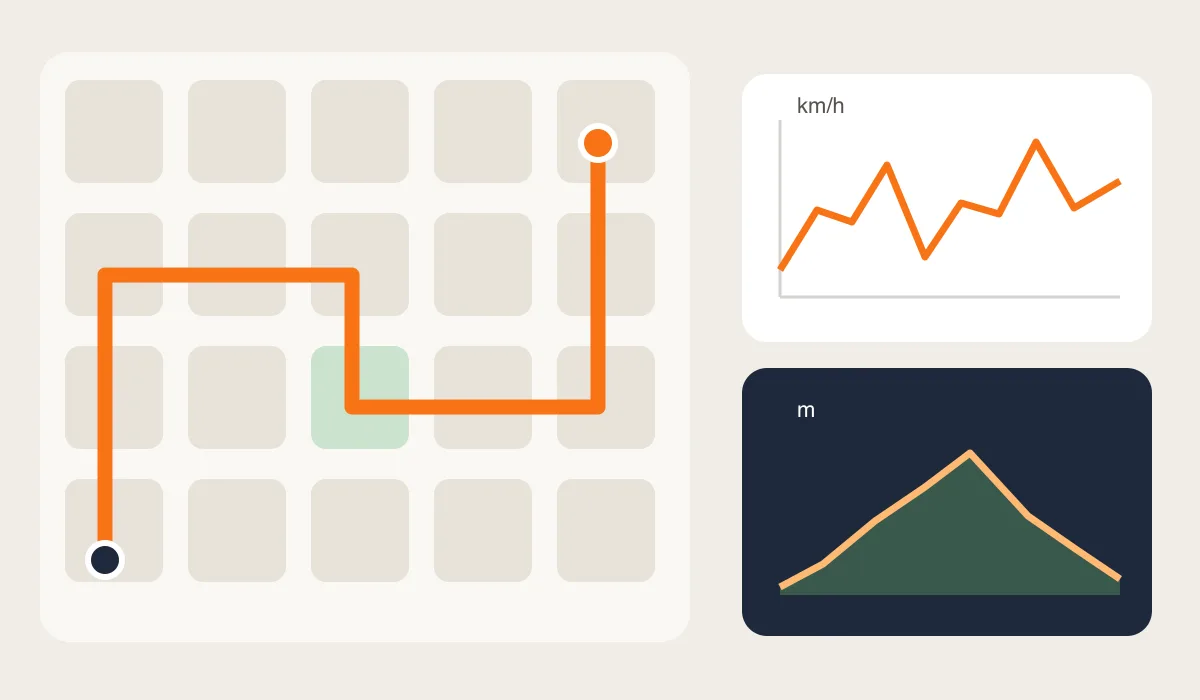
Turn an unplanned city walk into a useful record. Learn what a route, speed readings and elevation can tell you, and how to review a SpeedX trip afterward.